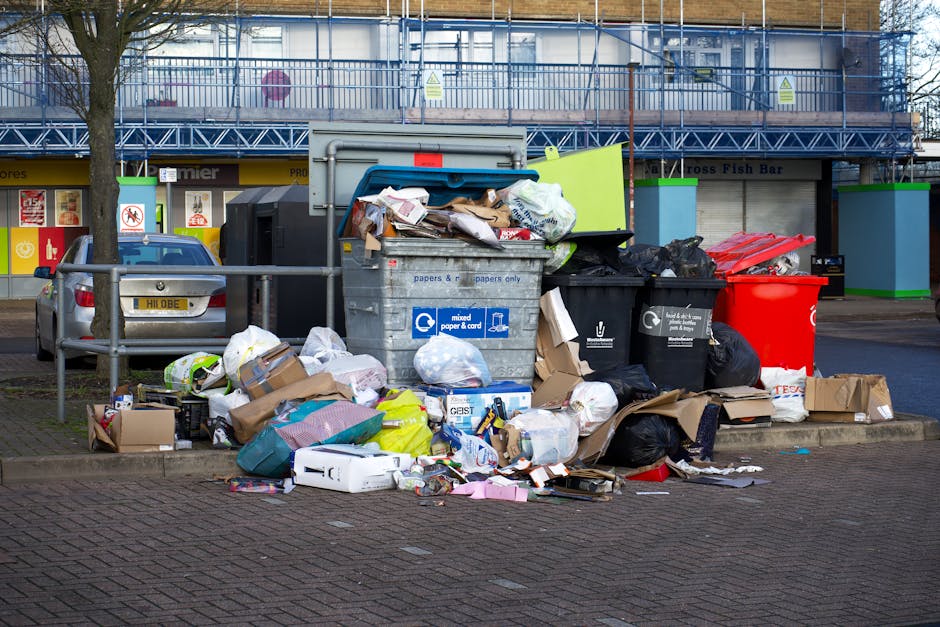
Avoid hidden fees in Barnet rubbish removal quotes: a practical guide to clear pricing
Getting a rubbish removal quote should feel straightforward. You describe the job, the provider gives you a price, and you book with confidence. But anyone who has been caught out by a surprise stair fee, a labour uplift, or an extra charge for "mixed waste" knows it is not always that neat. If you want to Avoid hidden fees in Barnet rubbish removal quotes, the key is to know what should be included, what can change the price, and which questions expose vague pricing before you commit.
That matters whether you are clearing a flat near the High Street, dealing with a last-minute office tidy-up, or just trying to get rid of a pile of bulky items that has somehow grown in the garage. Nobody enjoys the bill arriving higher than expected. Let's be honest, it spoils the whole job.
This guide breaks down how rubbish removal quotes usually work in Barnet, where hidden costs tend to appear, how to compare quotes properly, and what to ask before booking. It also covers practical checklist points, local trust signals, and a few simple habits that save money without making the process a faff.
Table of Contents
- Why avoiding hidden fees matters
- How rubbish removal quotes usually work
- Key benefits of clear, upfront pricing
- Who this is for and when it makes sense
- Step-by-step guidance for comparing quotes
- Expert tips for better results
- Common mistakes to avoid
- Tools, resources and recommendations
- Law, compliance, standards and best practice
- Options and comparison table
- Real-world example
- Practical checklist
- Conclusion
- Frequently asked questions
Why Avoid hidden fees in Barnet rubbish removal quotes Matters
Hidden fees do more than inflate the bill. They make the whole process unpredictable. If you are comparing rubbish removal companies in Barnet, a quote that looks cheaper at first glance can end up costing more once access issues, heavy lifting, or disposal categories are added in. That is not just frustrating; it makes it hard to budget properly.
For households, the difference might be small enough to annoy you for the rest of the week. For landlords, offices, or tradespeople, the stakes are higher. A small oversight can throw off a project budget or leave you explaining an awkward overrun to someone else. And in London, where parking, access, and timing can all complicate a job, unclear pricing can become a real headache.
To be fair, not every extra charge is "hidden." Some costs are legitimate and depend on the job. The problem is when they are not explained clearly before collection day. Good providers should make those variables obvious. If they do not, you should treat that as a warning sign rather than a minor inconvenience.
Practical summary: the cheapest rubbish removal quote is not always the best value. A clear quote with well-explained inclusions usually saves more money, stress, and time than a vague low headline price.
If you want a provider that makes pricing easier to understand, it helps to review a clear pricing and quotes guide alongside the rest of the service information. You can also learn more about the company's background on the about us page.
How Avoid hidden fees in Barnet rubbish removal quotes Works
The basic principle is simple: a trustworthy quote should explain what is included, what might change, and what would trigger any additional cost. In rubbish removal, pricing often depends on volume, weight, access, waste type, labour involved, and disposal requirements. If a provider only gives you a vague figure without any context, that figure is doing a lot of pretending.
Most quotes fall into one of three styles:
- Photo-based estimate - you send pictures and describe the items. This can be quick and useful for standard jobs, though it depends on the quality of the photos.
- Site visit or viewing - someone assesses the load in person. This is often more reliable for larger or awkward clearances.
- Telephone or online estimate - convenient, but only accurate if you give detailed information about access, waste type, and size.
Hidden fees usually appear when the original description was incomplete or the quote was intentionally vague. For example, a "single van load" sounds simple until you find out the vehicle cannot park nearby, there are three flights of stairs, and the waste includes bulky plasterboard or other specialist material. Suddenly the numbers start moving.
The best way to protect yourself is to treat the quote like a mini specification. Ask what the price covers, what could increase it, and whether any common extras are already included. If the answer is clear, you are in much safer territory.
In practical terms, this means checking the fine details before booking and getting the provider to confirm them in writing. A proper quote should not feel like a puzzle. It should feel like a plan.
Key Benefits and Practical Advantages
When quotes are transparent, the benefits go beyond avoiding surprise charges. You make faster decisions, compare providers more fairly, and reduce the chances of awkward disagreements on the day.
- Better budgeting: you know the likely final cost before the work begins.
- Cleaner comparisons: you compare like with like instead of comparing a full-service quote to a bare minimum price.
- Fewer delays: the job is less likely to stall while someone argues about add-ons.
- Less stress: you are not watching the collection with one eye and the invoice with the other.
- Improved trust: clear pricing is usually a sign of a more organised operation overall.
There is also a very practical benefit that gets missed: clear pricing helps you decide what to remove now and what can wait. If the quote is transparent, you can split a big clear-out into sensible stages instead of paying for more than you need all at once.
That is especially helpful for offices, rentals, and small businesses where there is always a little pile of "we should deal with that next month" in the corner. Next month usually arrives with a smug look on its face.
Who This Is For and When It Makes Sense
This approach makes sense for anyone booking rubbish removal in Barnet and wanting a fair, predictable price. It is especially useful if you are:
- moving home or clearing a property
- getting rid of old furniture, appliances, or mixed household waste
- clearing a garden, shed, or garage
- managing an office declutter or small commercial clearance
- co-ordinating a rental turnaround between tenants
- booking a one-off clearance after renovation or decorating
If your job is simple and low risk, a quick quote may be enough. If it is awkward, heavy, time-sensitive, or involves mixed materials, you should ask more detailed questions. Truth be told, the more "interesting" the job sounds, the more likely the final bill can drift if things are not pinned down early.
It also makes sense if you have had a bad experience before. A lot of people only start checking quote details after being caught once. That is understandable, but you do not need to learn the hard way twice.
Step-by-Step Guidance
Here is a sensible process for comparing Barnet rubbish removal quotes without getting stung by hidden extras.
- List exactly what needs removing. Be specific. "Old stuff" is not enough. Note the number of bags, furniture items, appliances, and any heavy or awkward pieces.
- Take clear photos. Capture the whole load, access points, stairs, driveways, and any tight corners. A good photo often prevents a bad surprise later.
- Describe access honestly. Mention if parking is limited, if the item is in a loft, or if there are stairs involved. Access is one of the biggest reasons a quote changes.
- Ask what the price includes. Find out whether labour, loading, disposal, and basic sweep-up are part of the quote.
- Ask what might cost extra. Common extras can include waiting time, parking difficulty, very heavy items, specialist waste, or an unexpectedly larger load.
- Request confirmation in writing. A message or email summary is useful if anything needs checking later.
- Compare more than price. Look at clarity, responsiveness, and whether the company seems willing to explain things plainly.
If you are unsure how to phrase the job, use plain language. "Two sofas, one mattress, six black bags, and a dismantled desk from the first floor" tells a provider far more than "household waste." Simple wins here. Every time.
Expert Tips for Better Results
After enough quote comparisons, a few patterns become obvious. The best providers are usually the ones that ask good questions before giving a final price. That is a good sign, not an annoying one.
Ask about "all-in" pricing
An all-in quote is easier to trust because it reduces the number of unknowns. You want to know whether the price covers loading, labour, disposal, and any normal handling of the materials. If the provider uses phrases like "from" or "starting at" a lot, ask what the final figure depends on.
Watch for vague wording
Words such as "standard load," "as required," or "subject to condition" are not automatically bad, but they do need context. Ask for examples. What does standard mean in practice? What conditions trigger a different rate?
Check whether access has been considered
A lot of quote complaints come down to access being overlooked. Narrow streets, no parking nearby, stair-only access, and basement collections can all change the work involved. In Barnet, that matters more than many people expect.
Ask if the waste type matters
Mixed rubbish is often straightforward, but some waste types need extra handling or separate disposal. Do not assume every item is treated the same. If you have broken tiles, electrical items, plasterboard, or items with sharp edges, mention them early.
Look for a company that explains calmly
This is underrated. A provider who takes the time to explain their pricing usually values fewer disputes later. That calm, plain-spoken tone is worth a lot. A flashy quote is not.
If you want to compare price policy details alongside other service information, the company's terms and conditions and payment and security information can be useful reading. A clear business tends to make those pages easy to understand too.
Common Mistakes to Avoid
Most hidden-fee problems are avoidable. Usually they come from rushing, assuming, or focusing only on the headline price.
- Choosing the lowest quote without checking what it covers. A bargain quote can become an expensive one if the extras are stacked up later.
- Under-describing the job. If you leave out stairs, parking restrictions, or awkward items, the quote may change on arrival.
- Not asking about labour time. Some jobs look small but take longer than expected, especially in tight spaces.
- Ignoring waste type. Specialist or non-standard items can affect price and disposal handling.
- Failing to get confirmation. A quick text or email summary can save a lot of grief.
Another mistake is assuming every company means the same thing by "quote." Some are giving a true fixed price, while others are giving a rough estimate that may change after inspection. Those are not the same thing, even if they sound similar on the phone.
And yes, it is mildly annoying that you have to ask all this. But a few extra minutes now is better than arguing over an invoice later. Nobody wants that conversation on a wet Tuesday afternoon, standing by a half-empty hallway.
Tools, Resources and Recommendations
You do not need fancy tools to avoid hidden fees. A small amount of preparation is enough.
- Your phone camera: take wide shots and close-ups of the load.
- A rough item list: write down items as you walk through the property.
- Photo notes: jot down which floor items are on and whether parking is easy or difficult.
- Message or email records: keep the quote summary in writing.
- A simple comparison grid: compare price, inclusions, access assumptions, and response quality.
For a straightforward overview of how pricing is handled, it is worth reviewing the company's dedicated pricing and quotes information. If the job also involves environmental considerations, the recycling and sustainability page can help you understand how waste is approached after collection.
If you are unsure whether your enquiry is straightforward enough for a quick estimate, the safest move is to use the contact page and give a fuller description. A good first message saves time for everyone.
Law, Compliance, Standards and Best Practice
Rubbish removal is not just a pricing issue. In the UK, waste handling also sits within a broader framework of legal duties, safe handling expectations, and responsible disposal practices. You do not need to become a compliance expert, but it helps to know that reputable operators should be thinking about more than just collection day.
For customers, the practical takeaway is simple: choose a provider that is clear about how it handles waste, how it manages safety, and what happens if something changes on site. If a company cannot explain those basics, you may want to pause. That applies whether the job is domestic or commercial.
Good practice usually includes:
- clear pre-collection descriptions of the waste
- safe loading and handling procedures
- responsible treatment of recyclable materials where possible
- transparent payment expectations
- fair complaint handling if something goes wrong
You can usually judge a company by how openly it presents its policies. Pages such as health and safety policy, insurance and safety information, and complaints procedure are useful signals because they show the business has thought about risk, accountability, and customer experience.
That does not guarantee perfection, of course. Nothing does. But it does show the company has a framework rather than just a mobile phone and a van.
Options, Methods, or Comparison Table
Different quoting methods suit different jobs. Here is a simple comparison to help you decide which one is most likely to prevent hidden fees.
| Quote method | Best for | Strengths | Possible downside |
|---|---|---|---|
| Photo estimate | Standard household or office clear-outs | Fast, convenient, easy to compare | Can miss access issues if photos are incomplete |
| Site visit | Larger, awkward, or mixed clearances | More accurate, fewer surprises | Takes more time to arrange |
| Phone estimate | Simple jobs with very clear descriptions | Quick and efficient | Reliant on how well you explain the job |
| Online form estimate | People who want a written trail from the start | Useful record, easy to submit details | May need follow-up for unusual items |
If your clearance is simple, a photo estimate may be enough. If there are stairs, no parking, bulky items, or a lot of mixed material, a site visit or more detailed written estimate can be worth the extra effort. It is the difference between "probably fine" and "yes, we know exactly what we are dealing with."
Case Study or Real-World Example
A typical Barnet scenario goes like this. A homeowner wants to clear a spare room, a broken wardrobe, a few bags of old clutter, and some office bits left over from remote working. The first quote sounds attractive because it is quick and low. But the provider has not asked about access, and the property is on an upper floor with limited parking nearby.
Another provider asks for photos, confirms the floor level, checks whether the wardrobe is dismantled, and asks whether any of the waste is heavy or specialist. The second quote may be a bit higher at first glance. But it is clearer. The price includes the likely labour and access assumptions, so the final bill is far less likely to change.
That is the real lesson. A lower headline price is not always a better deal if it leaves room for escalation. The more specific the quote, the safer the comparison.
In our experience, people usually feel much calmer once the quote is explained properly. They stop worrying about the "what ifs" and can just get the job done. Which, frankly, is the whole point.
Practical Checklist
Use this checklist before you accept any rubbish removal quote in Barnet.
- Have I described every item clearly?
- Have I shared photos from different angles?
- Have I mentioned stairs, access restrictions, and parking conditions?
- Have I asked whether labour and loading are included?
- Have I checked whether the quote is fixed or only an estimate?
- Have I asked what could cause the price to change?
- Have I confirmed any extra charges in writing?
- Have I compared more than just the headline price?
- Have I looked at payment, safety, and complaints information?
- Do I feel clear, not rushed, about what happens next?
If you can tick most of those boxes, you are in a much better position. If not, pause and ask again. A proper quote should stand up to a few sensible questions.
Conclusion
To Avoid hidden fees in Barnet rubbish removal quotes, focus on clarity, not just price. The best way to protect yourself is to give a full description of the job, ask what is included, understand what could change the cost, and get the details in writing before collection day. Simple, really. Not always easy, but simple.
A good rubbish removal quote should make you feel informed, not suspicious. It should answer your questions before you need to chase them. And if a company is transparent about pricing, safety, payments, and how it handles complaints, that is usually a strong sign you are dealing with professionals rather than guesswork in a hi-vis jacket.
If you are ready to compare your options, review the company's pricing approach, check the payment and security details, and explore the recycling and sustainability commitment to see whether the service aligns with what matters to you.
Get a free quote today and see how much you can save.
And if you are still unsure, that is fine. Ask one more question. It is a small thing, but it often makes all the difference.
Frequently Asked Questions
What counts as a hidden fee in rubbish removal?
A hidden fee is any charge that was not made clear before booking or that appears later without proper explanation. It might be an access charge, a labour uplift, a disposal category fee, or an extra charge for items the provider did not ask about up front.
How do I know if a Barnet rubbish removal quote is genuine?
A genuine quote should explain what is included, what could change the price, and how the provider arrived at the figure. If the quote is vague, unusually low, or refuses to clarify basics, that is worth questioning.
Should I send photos before getting a quote?
Yes, if possible. Photos help the provider understand volume, access, and item type. A few clear pictures can prevent a lot of guesswork and reduce the chance of later price changes.
Is the cheapest quote usually the best value?
Not necessarily. A very low quote can be missing labour, loading, access assumptions, or disposal details. Better value usually comes from the most transparent quote, not simply the lowest number on the page.
What information should I include when asking for a quote?
Include the type and number of items, where they are located, whether there are stairs, parking or access issues, and whether any items are heavy, bulky, or unusual. The more accurate your description, the more reliable the quote.
Can rubbish removal prices change on the day?
They can, if the actual job differs from the description. A fair provider should explain this before booking. If the situation on site matches what you described, there should be less reason for the price to move.
What if I have mixed waste and furniture together?
Mixed loads are common, but they should still be described clearly. Some materials may need different handling or disposal methods, so it is best to mention everything upfront rather than splitting the information.
How can I avoid extra charges for access problems?
Tell the provider about stairs, tight hallways, limited parking, long carries, or difficult loading points before the quote is accepted. Access is one of the most common reasons for added cost, so do not leave it out.
Are written quotes better than phone quotes?
Written quotes are usually easier to compare and refer back to later. Phone quotes can be fine for simple jobs, but it helps to follow up in writing so there is a clear record of what was agreed.
What should I ask before booking rubbish removal in Barnet?
Ask what the quote includes, what could change the price, whether there are any extra charges, how payment works, and what happens if the waste type or access turns out to be different from expected.
Do reputable companies explain their policies clearly?
They usually do. Clear providers tend to make their pricing, safety, payment, and complaints information easy to find. That openness is a good sign, because it suggests the business expects to be accountable.
Where can I go if I have a question before I book?
The best next step is to use the company's contact page and explain the job in detail. If you want a better sense of the business before booking, the about us page is also helpful.