Office Clearance in Barnet
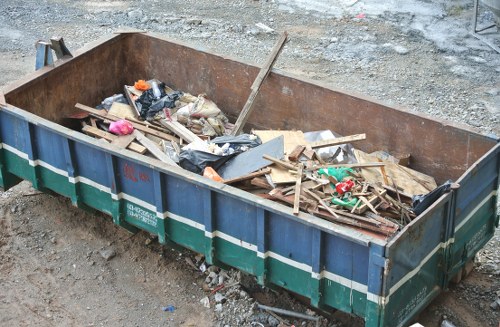
Office clearance in Barnet needs to be practical, tidy and planned around the way your premises are used. Our service covers the removal of redundant office furniture, filing, shelving, reception items, mixed workstations and general unwanted contents from business spaces of different sizes. Whether you are reducing floor space, updating a suite, or emptying an office at the end of a lease, we provide a straightforward clearance service focused on making the process manageable from start to finish.
We work with offices, shared workspaces and commercial rooms that need a reliable clear-out rather than a piecemeal collection. The aim is to remove the items you no longer need while keeping useful furniture and equipment separate, so the remaining space is left ready for its next use. If you need a clear quote, we can discuss the scope and help you decide which items should be included.
Our approach is built around sensible handling, careful sorting and clear communication. Large items can be dismantled where appropriate, and mixed contents can be separated so that reusable, recyclable and general waste streams are dealt with properly. If you are comparing options, think about whether the job is a single room, an entire floor or a phased clearance. That helps shape the most suitable plan. Request a quotation when you are ready.
What our office clearance service includes
Office clearance is rarely just a matter of carrying out desks and chairs. Workplaces often contain a mixture of furniture, storage, display items, packaging, out-of-date paperwork containers and miscellaneous fittings that need to be removed in an orderly way. Our service is designed to deal with these collections as a whole, so the process is not slowed down by having to arrange separate removals for different categories of item.
In many premises, clearance also has to be handled with care around access routes, shared corridors, lifts and other occupied areas. We can work through items systematically and keep the flow sensible, which is particularly useful when there is still some day-to-day business activity on site. A planned office clearance makes it easier to protect remaining furniture and maintain a usable environment during the work.
Typical items we clear
Common office clearance items include desks, office chairs, pedestal drawers, meeting tables, shelving, cupboards, whiteboards, reception seating and general loose contents. Where equipment is included, it may also cover monitors, printers, small electrical items and accessories that are no longer required. If the job involves a wider mix of contents, we can separate the obvious categories and deal with them according to the nature of the materials.
Furniture removal and internal clearance planning

Furniture is often the largest part of an office clearance, and it can dictate how the job is carried out. Heavy desks, boardroom tables and storage units may need two-person handling or partial dismantling before they can be removed safely. We plan the work around access, the condition of the items and the layout of the office so that movement through the building remains controlled rather than rushed.
When an office has been fitted out over time, the contents may include a mixture of older and newer furniture that does not all need the same treatment. Some pieces may be suitable for reuse, while others are ready for disposal. By separating the load carefully, the clearance can be more efficient and the end result more orderly. This is especially helpful if you want one area cleared before another is tackled.
Useful planning points include making a broad list of the main item types, deciding whether anything should remain in place, and identifying any access restrictions before the work starts. If you can already see what must be removed, the quotation process is usually simpler. For larger jobs, a brief walk-through or a set of clear photos can help define the scale without creating extra disruption for your team.
Business clearances for changing workplaces
Commercial premises change for many reasons, and office clearance often follows a move, refit, consolidation or closure. In those situations, the work may need to be completed in stages rather than all at once. We can help with partial clearances where one department is being emptied, as well as fuller jobs where the space must be cleared down to a bare shell or to an agreed handover condition.
The right approach depends on what remains in the building, which items are staying, and how the work fits around other contractors or site arrangements. A well-organised clearance reduces the chance of unnecessary disturbance and makes it easier to complete follow-on tasks such as decorating, maintenance or reconfiguration. If you are preparing a commercial move, early planning usually gives you more control over timing and item separation.
It can also be useful to think about the pace of the project. Some customers want one area cleared before they begin moving into another, while others need a single visit that removes everything identified in advance. We can discuss the practical details and shape the clearance around the way the premises will be handed over. Clear instructions on what stays and what goes help keep the work efficient.
From single rooms to larger office floors
Not every office clearance is the same size, and the method should match the space. A single room may only need a short visit and a small amount of sorting, while a larger office floor can require more structured removal across different areas. Meeting rooms, storage rooms, open-plan work areas and reception spaces often contain different kinds of contents, so the clearance is easier when the plan is based on the layout of the building.
Where several rooms are involved, it can help to group items by category before the work starts. That way, furniture, loose contents and special items are not mixed together unnecessarily. The job then progresses more smoothly and there is less risk of overlooking something that should remain on site. This method also works well when a business is clearing a space in stages and still needs part of the office to function.
- Single-room clearance for smaller office areas
- Multi-room removal for suites and larger floors
- Phased work for occupied or partially used premises
- Item separation for furniture, fittings and general contents
About Barnet

Barnet is a large district in north London with a long history that reaches from medieval market origins to a modern suburban landscape. The name is commonly associated with Chipping Barnet, the historic core, and with the wider London Borough of Barnet, which includes a broad range of neighbourhoods, residential streets and commercial centres. The area has long been linked to movement and trade, and the old high street remains one of its best-known focal points. Its character combines older street patterns with later development, creating a layered urban fabric rather than a single uniform centre. Many parts of Barnet retain a distinct local identity, yet they are also connected to the wider life of outer London through transport, shopping and community activity. The borough contains parks, schools, civic buildings and places of worship that reflect different periods of growth and change. One of the most recognisable historic references is the Battle of Barnet, fought in 1471 on land that is now part of the borough’s past rather than its daily skyline, but still important to its story. The locality also includes areas such as High Barnet, where the elevated setting and older streets sit alongside newer housing and everyday services. Green spaces, pocket parks and tree-lined roads are a feature of many neighbourhoods, while the built environment ranges from Victorian terraces to post-war estates and more recent apartment developments. This mixture gives Barnet a varied appearance and a strong sense of continuity between its older and newer parts. As with many north London districts, the area is defined not by one single landmark but by the relationship between historic centres, residential districts and the routes that connect them.
Office contents and specialist items
Some offices contain items that need more thought than standard desks and chairs. Archive boxes, display units, shelving systems, partition elements and fitted storage can all affect the clearance method. When these items are removed carefully, the result is cleaner and easier to hand over. If contents include mixed materials, they can be sorted to keep the process organised and to avoid unnecessary handling later on.
Specialist items are best treated according to their form, weight and condition. A heavy filing cabinet is handled differently from a stack of lightweight chairs, and fixed shelving may need partial dismantling before removal. We aim to remove the contents in a way that fits the building and the item type, so the work stays controlled. That approach is especially important in premises with narrow passages, shared entrances or awkward turning spaces.
Choosing the right scope
If you are unsure how much to include, it usually helps to define the job by area rather than by guesswork. For example, you may want one office emptied, a storage room reduced, or a full suite cleared before refurbishment begins. Once the scope is clear, the quotation can reflect the actual work required. When the list is broad, try to identify any items that must stay behind, so the clearance plan is accurate from the beginning.
What affects the quotation

A quotation for office clearance is usually shaped by the amount of material to be removed, the type of items involved and the practical conditions on site. Access, parking, floor level, lift availability and the ease of moving larger furniture can all influence how the job is planned. A straightforward room with easy access will naturally be different from a larger clearance that involves several floors or a tight internal route.
The mix of items also matters. Furniture, loose contents, storage units and electrical equipment are not identical in how they are handled, so the overall scope needs to be understood before the price is set. Clear information at the outset helps the work be quoted more accurately and keeps expectations realistic. If there are time constraints or phased access, those details are also relevant to the plan.
For best results, think about what needs to leave the premises and what remains in place. That may sound simple, but it is often the detail that makes the difference between a rough estimate and a useful quotation. Be specific where you can, especially if the clearance involves several rooms or a mixture of office furniture and stored contents. A quick enquiry can then be turned into a practical proposal.
Clearance for relocation, downsizing and end of lease
Office clearances are often tied to a business change rather than to one isolated item. Relocation can leave behind redundant furniture and duplicate equipment, while downsizing may mean that only part of the workplace needs to be emptied. End-of-lease clearances can be more exacting because the remaining space may need to be left in a specific state, so the removal plan must match the intended handover.
In those situations, it is helpful to decide early which items are staying with the business and which belong to the clearance. Some contents may be moved to another room or site, while others are no longer needed and can be removed altogether. A careful split between keep, relocate and clear helps the job progress without confusion. This is one reason businesses often prefer an organised clearance rather than ad hoc removals over several days.
If the office is still in use, a phased approach can reduce interruption. One room may be dealt with first, followed by the next once the staff move has progressed. That is often more convenient than trying to clear everything in a single rush. Orderly staging keeps the work easier to follow and allows the remaining operation to continue for as long as needed.
Recycling, reuse and responsible sorting
Office clearances frequently produce a mixed load, and responsible sorting is important. Furniture that can be reused, items suitable for recycling and general waste should not be treated as if they were all the same. Keeping the categories separate where possible makes the clearance neater and helps avoid unnecessary disposal of items that still have a practical use.
Many workplace items contain more than one material, which is another reason why careful handling matters. Metal frames, timber panels, plastic components and soft furnishings may all appear in the same office. By looking at the contents systematically, the clearance can be managed in a more considered way. That is useful both for the customer and for the overall quality of the service.
When a business has a large quantity of similar items, sorting can also prevent avoidable delays. For example, one group of furniture may be removed together while another is kept back for reuse or storage. A clear plan at the start means the job can be handled in a way that suits both the premises and the contents. If you would like the scope checked first, ask for a quotation.
Preparing an office clearance
Preparation does not need to be complicated. The most useful step is usually to identify the areas involved and note any items that should remain in place. If access is restricted, or if the clearance needs to happen around working hours, it is better to mention that early. A straightforward description of the site and the contents gives a much better basis for planning than a vague instruction to clear “everythingâ€.
It can also help to decide whether files, personal effects or sensitive materials need separate attention before the main clearance takes place. Not every office contains the same mix of contents, and it is sensible to deal with anything important before larger items are removed. If you are unsure how to group the work, a simple room-by-room outline is usually enough to begin with. The clearer the instructions, the easier it is to arrange the right response.
Once those points are settled, the next step is simple: send the details and ask for a quotation. If the job involves several rooms or a combination of furniture and miscellaneous contents, we can use that information to shape the most suitable clearance plan. For a smaller job, the same principle applies; a brief, accurate outline is usually enough to get started.